1900-1909
John Edmund Gardner was the youngest son of Thomas Gardner who described himself as an Oilman. The Gardners had been selling lamp oil at No.484 Strand for more than thirty years when John Edmund was born in 1819. They were also considerable property owners. Thomas's will made in 1837 with codicils in 1838 and 1840 mentions 35 houses both freehold and leasehold in various parts of London, including No 4 Leicester Square. John was baptised, like all his siblings at St Mar Read more »
I have worked for King’s College for almost twenty years but little did I know that I had another family link to the Strand. This emerged as a result of my deciding to research our family tree for my father’s 80th birthday. He has ancestors, as far back as the late 1700s, who moved from all over England and Wales to Yorkshire, presumably following jobs in the coalmining and manufacturing industries. When I researched my mother’s family history I found records for one family in a local mining village (Kippax) that went back well over 300 years. As several c Read more »
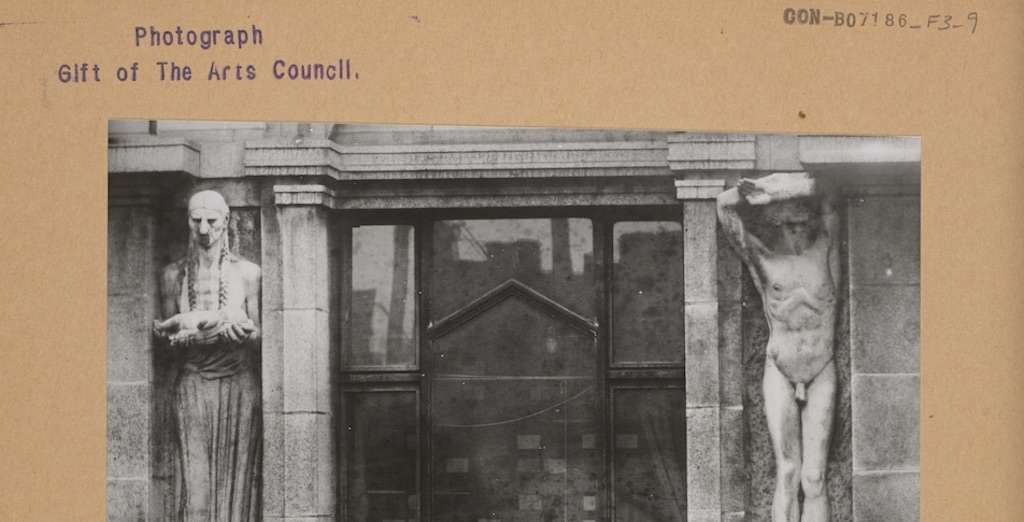
Shown at an art exhibition at The Connection at St Martins in November 2010. Click here to see more pictures from that exhibition.
For more on the Gaiety Theatre - formally on the Strand/Aldwych - see: http://www.arthurlloyd.co.uk/Strandmusik.htm
My room in King’s College faces out on to the quad and throughout the day today I kept hearing a single shout , that sounded like ‘coaaal...’ coming from the building works on the east wing of Somerset House and repeated every few seconds. From ground level it was inaudible but from the fourth floor of the South Range it was clear. The sound seemed so ‘out of place’, so unusual, so elemental. It was such a human - and in that sense alien - addition to the normal Strand soundscape of traffic noise. Read more »
In 1787 Robert Barker put a patent on a way of seeing: ‘panorama’. It is said that he came upon the term when surveying the city of Edinburgh from the top of Calton Hill. Moving to London, Barker reconstructed 360 degree views in a Leicester Square art gallery; an initiative mimicked by his son on the Strand in 1801. In 1830 the Strand panorama became a dissenting chapel; in 1832 an unpatented theatre – audiences were admitted free provided that they bought sweets from local shops: rose lozenges for the stalls and peppermint drops for the pit. Read more »